Your first two weeks in aligners
Speech, pressure, eating, and the habits that decide whether you finish on schedule.
The first fortnight is the adjustment period. Knowing what is normal makes it much easier.
Days one to three
Expect pressure. Your teeth will feel tight, and biting down will feel odd. This is the treatment working — the pressure is what moves teeth. It settles within about three days, and it is noticeably milder with each subsequent set.
A slight lisp is common for the first day or two as your tongue learns the new surface. Talking through it is genuinely the fastest fix.
Eating and drinking
Aligners come out for everything except water. That is not negotiable — eating with them in damages them, and sugary drinks trapped against enamel cause decay.
The practical consequence is that constant snacking becomes difficult, because every snack means removing, rinsing and replacing. Most people settle into three meals.
Cleaning
Rinse your aligners in cool water whenever they are out. Brush them gently with a soft brush, never with toothpaste, which is abrasive enough to scratch them cloudy. Hot water deforms them.
Brush your teeth before putting them back in. Sealing plaque against enamel for twenty-two hours is the one genuine risk of this treatment.
The habit that decides everything
Twenty-two hours a day. Treatment plans are built on that number, and the most common reason a case runs over is simply time out of the mouth. Take them out to eat, put them straight back in.
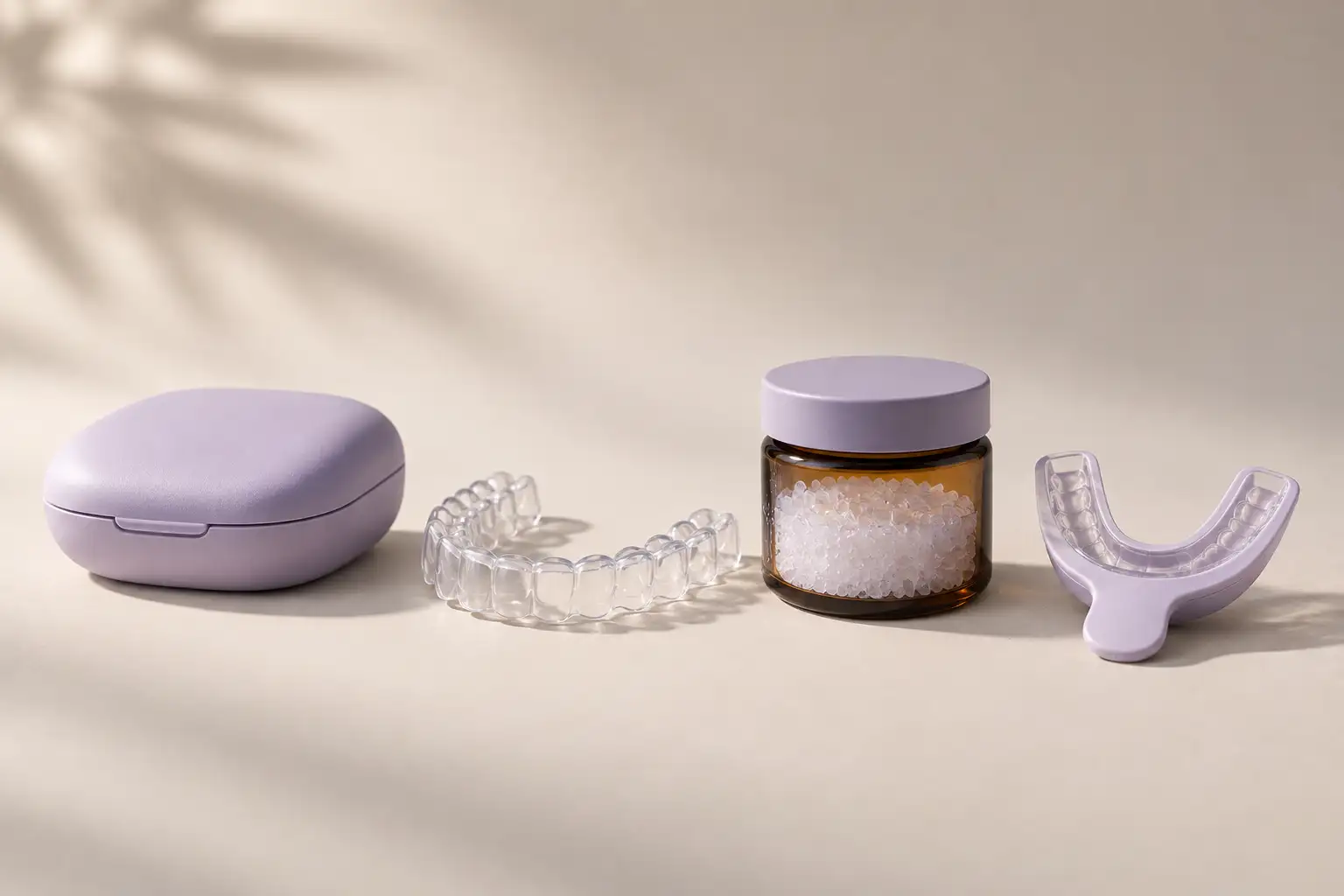
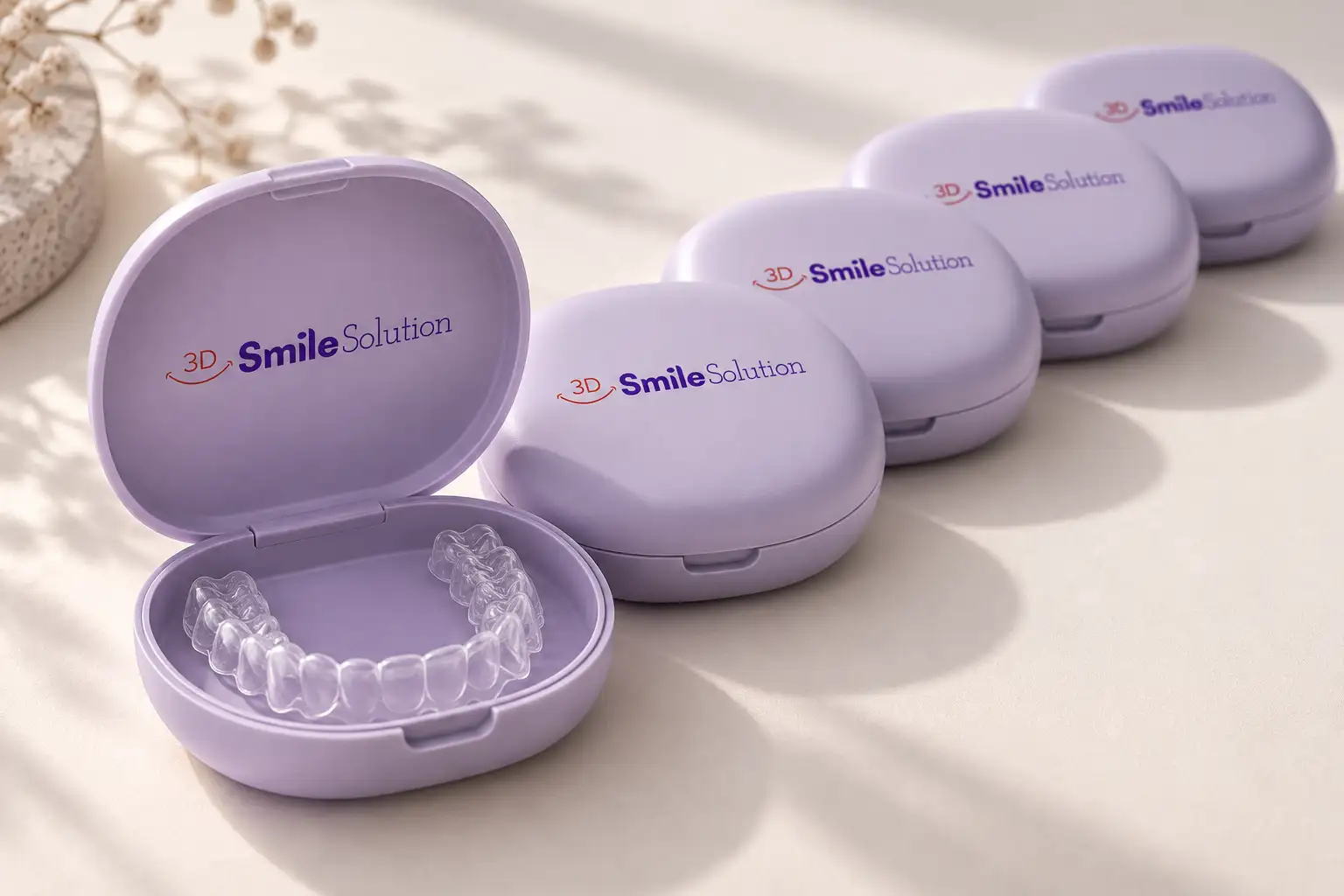
Two practical habits: always keep the case with you, and change to your next set at night so the tightest hours are spent asleep.
Wondering if this applies to you?
Book a free consultation and we’ll take a look.